
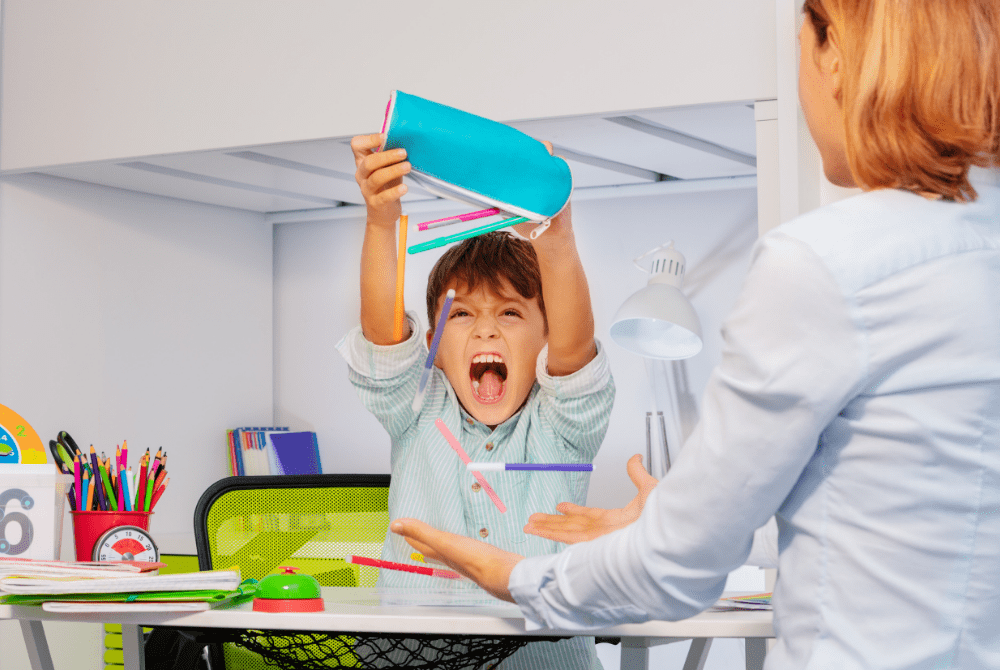
Big emotions are a normal part of childhood, but when your child is screaming, melting down, or overwhelmed, staying calm can feel almost impossible.
Many parents wonder whether they’re doing something wrong, whether their child’s reactions are normal, or how to support emotional regulation without losing their own patience.
Here’s the truth: helping kids regulate emotions starts with understanding how their brains work, not expecting them to behave like mini adults. When you know what’s happening in your child’s nervous system, it becomes easier to respond with steadiness, compassion, and confidence—even when the moment feels chaotic.
This guide answers the most common questions parents ask about helping kids regulate emotions, recognizing when extra support is needed, and preventing overload before it begins.
How can I stay calm when my child has a big emotional outburst?
When your child is overwhelmed, their brain shifts into survival mode. That means the part responsible for reasoning shuts down, and the emotional center takes over. This is why outbursts often feel irrational—they are.
The first step in helping kids regulate emotions is regulating your own.
Here’s how to stay calm in the moment:
1. Ground yourself first
Before you respond:
- Take one slow breath
- Unclench your jaw
- Drop your shoulders
Your calm body helps your child’s body find calm too.
2. Lower your voice instead of raising it
A softer tone signals safety and regulates their nervous system more effectively than commands.
3. Narrate what’s happening (not why)
Say things like:
“Your body feels overwhelmed right now.”
“I’m here. You’re safe.”
This models emotional awareness—key for helping kids regulate emotions long-term.
4. Step away briefly (if safe)
If you feel activated, give yourself 10–20 seconds to reset.
A regulated parent can do far more for helping kids regulate emotions than a reactive one.
What are the best ways to help my child regulate their emotions in the moment?
When a child is dysregulated, logic won’t reach them. They need connection, containment, and co-regulation.
Here are therapist-backed strategies for helping kids regulate emotions during an outburst:
1. Meet the intensity with presence, not pressure
Sit nearby, stay neutral, and let them know you’re with them, even if they can’t accept comfort yet.
2. Use simple, sensory-based tools
Try:
- Deep pressure (a firm hand on their back or a tight hug if they want it)
- Slow breathing together
- A quiet corner or calming object
These help reset the nervous system faster than words.
3. Keep your language short and predictable
Say things like:
“I’m here.”
“We’ll get through this.”
“Let’s breathe together.”
Consistency builds emotional safety, which is the foundation of helping kids regulate emotions.
4. Validate their experience
Validation doesn’t encourage “bad behavior”—it tells their brain they’re safe enough to calm down.
Try:
“I see how frustrated you are.”
“It makes sense you’re upset.”
How do I know if my child’s reactions are normal or a sign they need extra support?
Every child has big emotions sometimes—especially during transitions, growth spurts, tired days, or overstimulation.
But parents often worry about what’s “normal.”
Here’s what to consider:
Reactions tend to be normal if…
- Your child calms with support
- Meltdowns are tied to predictable triggers (tired, hungry, overwhelmed)
- They show emotional recovery afterward
- You’ve seen gradual improvement in helping kids regulate emotions over time
Extra support may help if…
- Outbursts are extremely frequent
- Your child stays overwhelmed for long periods
- Sensory issues seem to trigger intense reactions
- They become aggressive or self-harming
- You notice regression or shutdowns
- You struggle consistently with helping kids regulate emotions despite trying multiple strategies
A child therapist can help you understand what’s happening in your child’s nervous system, screen for underlying needs, and build a personalized plan for helping kids regulate emotions more effectively.
You never have to figure this out alone.
What can I do to prevent meltdowns or emotional overload before they happen?
Preventing emotional overload is one of the most effective parts of helping kids regulate emotions. Children thrive when their nervous systems feel predictable and supported.
1. Establish routines
Routines create emotional safety. Clear expectations reduce overwhelm.
2. Prepare them for transitions
Most meltdowns happen during “switching.”
Use countdowns: “5 minutes… 2 minutes… 1 minute…”
3. Teach feeling words during calm moments
Kids can’t use skills they don’t have. Building emotional vocabulary is core to helping kids regulate emotions.
4. Notice early cues
Irritability
Pacing
Clinginess
Sudden quietness
These are signs their system is getting overwhelmed.
5. Create daily sensory breaks
Movement, play, deep pressure, quiet time—anything that helps discharge energy and reset the nervous system.
By the time a meltdown begins, the nervous system is already overloaded. Prevention is one of the most powerful strategies for helping kids regulate emotions.
Final Thoughts: You can be the calm your child borrows
Your child’s emotions may feel “too much,” but they’re not too much for you to learn to navigate.
You don’t need to be perfect. You just need to be present.
Helping kids regulate emotions doesn’t start with stopping outbursts—it starts with creating enough safety, connection, and understanding that your child’s nervous system feels supported instead of scared.
Therapy can give you tools, language, and guidance so you can show up as the steady, grounded base your child needs—even on the hardest days.
Because you don’t have to calm every storm. You just need to help your child feel they’re not weathering it alone.
Feel Heard, Feel Safe, Feel Better - Contact Us

In-Person Sessions
2100 Manchester Rd. Suite 501-1
Wheaton, IL. 60187
Virtual Sessions
Throughout Illinois