
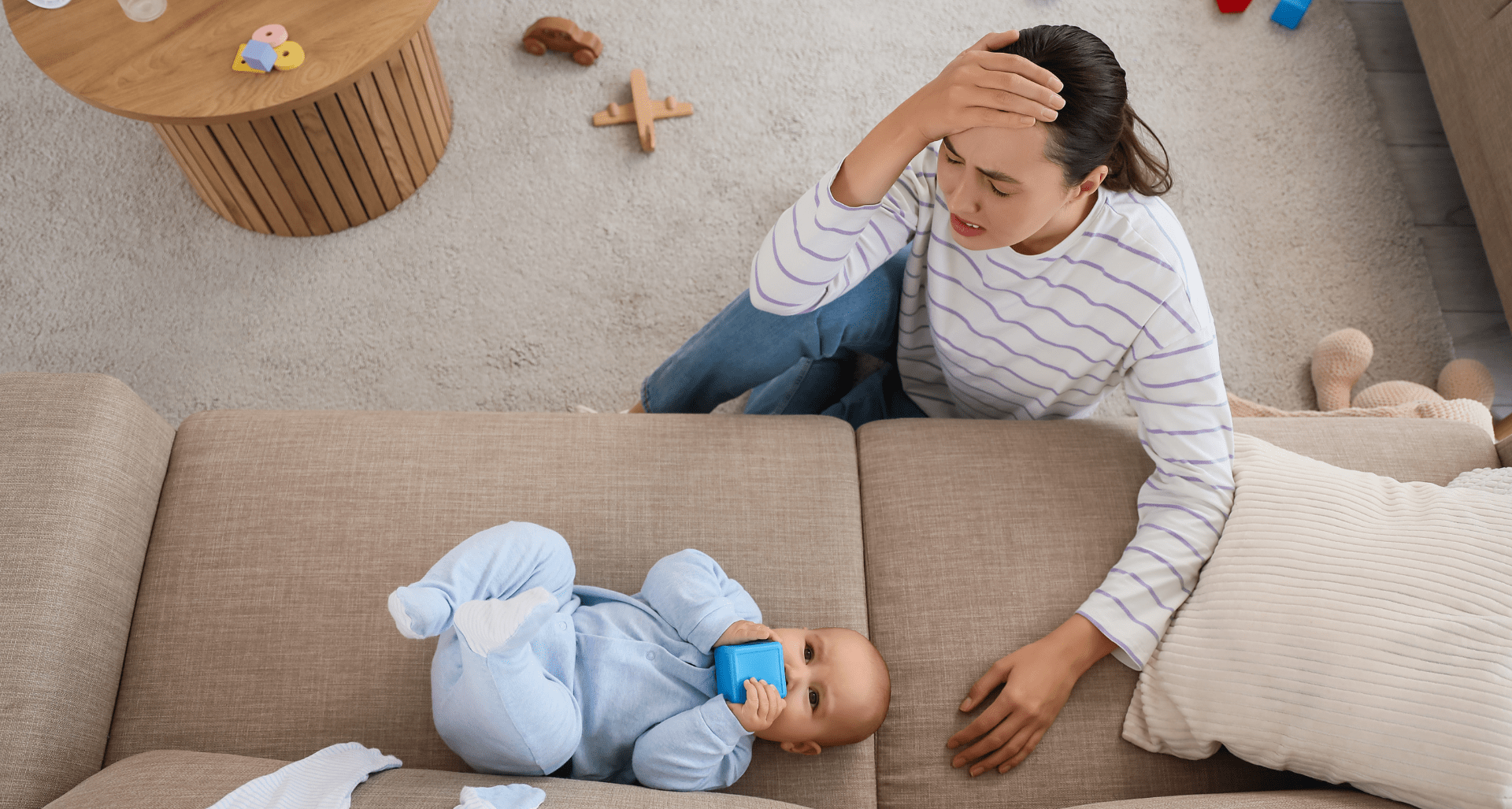
You’re reading all the parenting books. Following the experts. Doing gentle discipline. Validating feelings. Creating enriching activities. Limiting screen time. Preparing nutritious meals. Being present. Being patient. Being everything. Parental burnout symptoms
And you’re exhausted. Not just tired. Completely depleted. You fantasize about running away. You feel nothing when your child accomplishes something you should be proud of. You’re going through the motions of good parenting while feeling dead inside.
This is parental burnout symptoms showing up, and it’s more common than anyone talks about. Because we’ve created this impossible standard of “good parenting” that requires endless energy, endless patience, and endless emotional availability.
And humans just aren’t built for that.
These symptoms aren’t about being a bad parent. They’re about being a human who’s been running on empty for too long while trying to meet unrealistic expectations. And recognizing this is the first step to actually getting help instead of just trying harder.
What Are the Signs of Parental Burnout?
The symptoms look different from regular exhaustion. This isn’t just “I need a nap.” This is deeper depletion that doesn’t go away with rest.
Emotional exhaustion. You feel completely drained. The idea of one more need, one more question, one more conflict feels unbearable. Parental burnout symptoms include this bone-deep fatigue that sleep doesn’t fix.
Emotional distance from your kids. You love them, but you feel nothing. You’re going through the motions without any genuine connection. This detachment is one of the most distressing parental burnout symptoms because it feels like you’ve become the kind of parent you never wanted to be.
Loss of enjoyment. Things that used to be fun with your kids now feel like obligations. Bedtime stories, playing games, family outings… it all feels like work. When joy disappears from parenting, that’s the symptoms talking.
Feeling ineffective. You’re doing all the “right” things but feel like you’re failing anyway. Nothing you do seems good enough. This sense of parental inadequacy is a hallmark of parental burnout symptoms.
Physical symptoms. Headaches, body aches, getting sick frequently, sleep problems even when kids are sleeping. Parental burnout symptoms show up in your body, not just your emotions.
Irritability and short temper. You’re snapping at your kids over small things. You have no patience left. The irritability that comes with parental burnout symptoms isn’t about your kids’ behavior. It’s about your depleted state.
Comparison and shame. You look at other parents who seem to have it together and feel like a failure. The shame spiral is exhausting and feeds parental burnout symptoms.
Fantasizing about escape. You imagine what life would be like without the responsibility. This doesn’t mean you don’t love your kids. It means you’re experiencing parental burnout symptoms and need help.
Why Do I Feel Exhausted Even When I’m Doing Everything “Right”?
This is the cruel irony of parental burnout symptoms. Often the people most affected are the ones trying hardest to be good parents.
“Good parenting” is unsustainable. The current ideal of parenting requires constant emotional labor, endless patience, creative enrichment, nutritious meals, limited screen time, gentle discipline, and being endlessly available. Nobody can maintain that. Trying to meet these standards creates parental burnout symptoms.
You’re not getting enough back. Parenting young kids especially is constant giving with very little receiving. The imbalance of always pouring out without being filled up creates parental burnout symptoms over time.
You’ve lost yourself. When your entire identity becomes “parent,” when you have no time for yourself, no adult friendships, no hobbies, no rest… parental burnout symptoms are inevitable. You can’t pour from an empty cup, but somehow we expect parents to.
The standards keep rising. Every generation seems to add more requirements for “good parenting.” Now you’re supposed to do everything previous generations did plus be more emotionally attuned, more present, more intentional. The weight of these expectations creates parental burnout symptoms.
You’re doing it without a village. Humans evolved to raise children in communities. Extended family, neighbors, friends all sharing the load. Now parents are expected to do it mostly alone. Isolation intensifies the symptoms.
Your nervous system is constantly activated. Being responsible for keeping small humans alive keeps you in a state of low-level stress all the time. Your body never fully relaxes. This chronic activation leads to parental burnout symptoms.
Doing everything “right” takes more energy. Gentle parenting, conscious parenting, attachment parenting… these approaches are valuable but they’re also emotionally demanding. They require you to regulate your own emotions while helping your child regulate theirs. Without proper support, this creates parental burnout symptoms.
Can Trying to Be a Perfect Parent Make Things Worse?
Yes. Absolutely. Perfectionism in parenting is one of the fastest routes to parental burnout symptoms.
Perfectionism means you never feel good enough. No matter what you do, you could have done it better, more patiently, more creatively. This constant self-criticism feeds parental burnout symptoms.
You can’t take breaks without guilt. Perfect parents don’t need breaks, right? So you push through exhaustion instead of resting, making parental burnout symptoms worse.
You’re trying to control things you can’t control. Your child’s emotions, their development, how quickly they learn things… perfect parents think they should be able to manage all of it. The failure to control the uncontrollable intensifies parental burnout symptoms.
You’re performing instead of being. When you’re focused on doing everything perfectly, you’re not actually present with your kids. You’re monitoring your own performance. This disconnection is both a cause and symptom of parental burnout symptoms.
Your kids pick up on the tension. Kids know when you’re stressed, even if you’re hiding it. Their behavior often gets worse, which makes you try harder to be perfect, which increases parental burnout symptoms. It’s a vicious cycle.
Perfectionism isolates you. You can’t admit you’re struggling because that would mean you’re not perfect. So you suffer alone with the symptoms instead of getting help.
Recovery requires letting go of perfect. But when your identity is wrapped up in being a good parent, accepting that you can’t be perfect feels like failure. This keeps you stuck in parental burnout symptoms.
The truth is, your kids don’t need perfect. They need a parent who’s reasonably okay, present enough, trying their best. And you can’t be any of those things when you’re depleted from chasing perfection.
How Do I Recover from Parental Burnout Without Feeling Guilty?
Recovering from parental burnout symptoms requires doing things that will make you feel guilty at first. That’s part of the process.
Accept that you’re burned out. Stop trying to push through. The symptoms are telling you something needs to change. Listen.
Lower your standards. Screen time happens. Frozen meals are fine. Not every moment needs to be enriching. Your kids will survive “good enough” parenting while you recover from parental burnout symptoms.
Take actual breaks. Not just when kids are asleep and you’re doing laundry. Real breaks where you’re not responsible for anyone. Yes, you’ll feel guilty. Do it anyway. Parental burnout symptoms don’t improve without rest.
Get help. Babysitters. Partners doing more. Saying no to activities. Asking family for support. Whatever you can access. Recovering from these symptoms requires reducing your load.
Reconnect with yourself. Remember who you are outside of being a parent. Hobbies, friendships, interests, rest. These aren’t selfish. They’re necessary for healing the symptoms.
Set boundaries. You don’t have to be available every second. You can enforce quiet time. You can say “I need a break.” Boundaries aren’t mean. They’re how you prevent the symptoms from destroying you.
Stop comparing. Other parents’ social media doesn’t show their reality. Everyone’s struggling. Your symptoms are valid regardless of what others seem to be managing.
Address the guilt. The guilt comes from believing you should be able to do it all. You can’t. Nobody can. The guilt is part of the burnout, not truth about your parenting.
Consider therapy. If the symptoms are severe or not improving, professional support helps. You deserve help navigating this.
Communicate with your kids age-appropriately. “Mommy needs some quiet time” or “I’m feeling overwhelmed and need a break” teaches them that adults have needs too. This is healthy modeling, not failure.
You’re Not a Bad Parent
Experiencing these symptoms doesn’t mean you’re failing. It means you’re human. It means you’ve been trying to meet impossible standards without enough support.
The parents most likely to experience parental burnout symptoms are often the ones who care most, try hardest, and put the most pressure on themselves. That’s you. You’re burned out because you’ve been giving everything without protecting your own wellbeing.
Recovery means accepting that you matter too. That your needs are valid. That taking care of yourself isn’t selfish, it’s necessary. Your kids need you to be okay more than they need you to be perfect.
Parental burnout symptoms are reversible. With support, rest, lowered standards, and actual breaks, you can recover. You can find moments of joy in parenting again. You can feel connected to your kids instead of just exhausted by them.
But first, you have to stop trying to be the perfect parent and start trying to be a sustainable one. That might feel like giving up. It’s not. It’s choosing to survive and actually be present instead of burning yourself out trying to do everything “right.”
Your kids need you healthy more than they need you perfect. Start there.
Feel Heard, Feel Safe, Feel Better - Contact Us

In-Person Sessions
2100 Manchester Rd. Suite 501-1
Wheaton, IL. 60187
Virtual Sessions
Throughout Illinois