
COUNSELING FOR ADULTS
Adult counseling in Illinois for individuals navigating anxiety, depression, trauma, grief, life transitions, and emotional overwhelm. Compassionate, evidence-based therapy helps adults build emotional regulation, healthier coping skills, and greater confidence across all stages of adulthood.

ANXIETY

GRIEF & LOSS

TRAUMA

NEURODIVERGENT PARENTS

DEPRESSION

OCD
At a Glance
- For: Adults navigating life transitions and emotional challenges
- Common Concerns: Anxiety, depression, trauma, grief, burnout, relationship stress
- Approach: Evidence-based therapy including CBT, ACT, and psychodynamic approaches
- Sessions: 55–60 minutes
- Format: In-person (Wheaton, IL) and virtual throughout Illinois
Expert Counseling for Adults
What Approaches Are Used in Adult Counseling?
Our counseling for adults is grounded in proven, evidence-based approaches that meet you where you are in life. Techniques like Cognitive Behavioral Therapy (CBT) help you identify and shift unhelpful thoughts and behaviors. Acceptance and Commitment Therapy (ACT) supports you in moving toward your values while building resilience in the face of life’s challenges. For those who want to explore deeper patterns, psychodynamic therapy uncovers how past experiences shape present struggles. By tailoring these approaches to your unique needs, we create a path toward meaningful change and long-term growth.
How Adult Counseling Works
Intake
Therapy begins with an intake session focused on understanding what brings you in, your current challenges, and your goals for counseling. This step helps establish a supportive foundation and clarify how therapy can best meet your needs.
Assessment
Early sessions explore patterns in emotions, thoughts, relationships, and life stressors. Your therapist works with you to understand what may be contributing to distress and what supports growth and stability.
Treatment
Ongoing sessions focus on evidence-based therapeutic work tailored to your goals. This may include building coping skills, processing past experiences, improving emotional regulation, and navigating life transitions or relationship challenges.
Integration
Therapy supports applying insights and tools to daily life. This phase focuses on strengthening awareness, practicing new strategies, and making changes that feel sustainable outside of sessions.
Follow-Up / Intensives
Therapy continues for as long as it feels helpful. Goals are revisited regularly, with flexibility to deepen work, shift focus, or plan next steps as needs evolve over time.
What Can Adult Counseling Help With?
Managing career burnout and finding balance
Building stronger communication in relationships
Navigating the stresses of parenting and family life
Adjusting to retirement and major life transitions
Exploring identity, purpose, and personal growth
Healing from past trauma or unresolved patterns
Developing healthier coping tools

Who Is Adult Counseling For?
Young Adults
Support for career uncertainty, identity exploration, relationship struggles, financial stress, independence transitions, and more.
Mid-Life
Support for parenting demands, career burnout, marital conflict, caregiving for aging parents, health changes, and more.
Older Adults
Support for retirement stress, grief and loss, health concerns, loneliness, adjusting to new routines, and more.
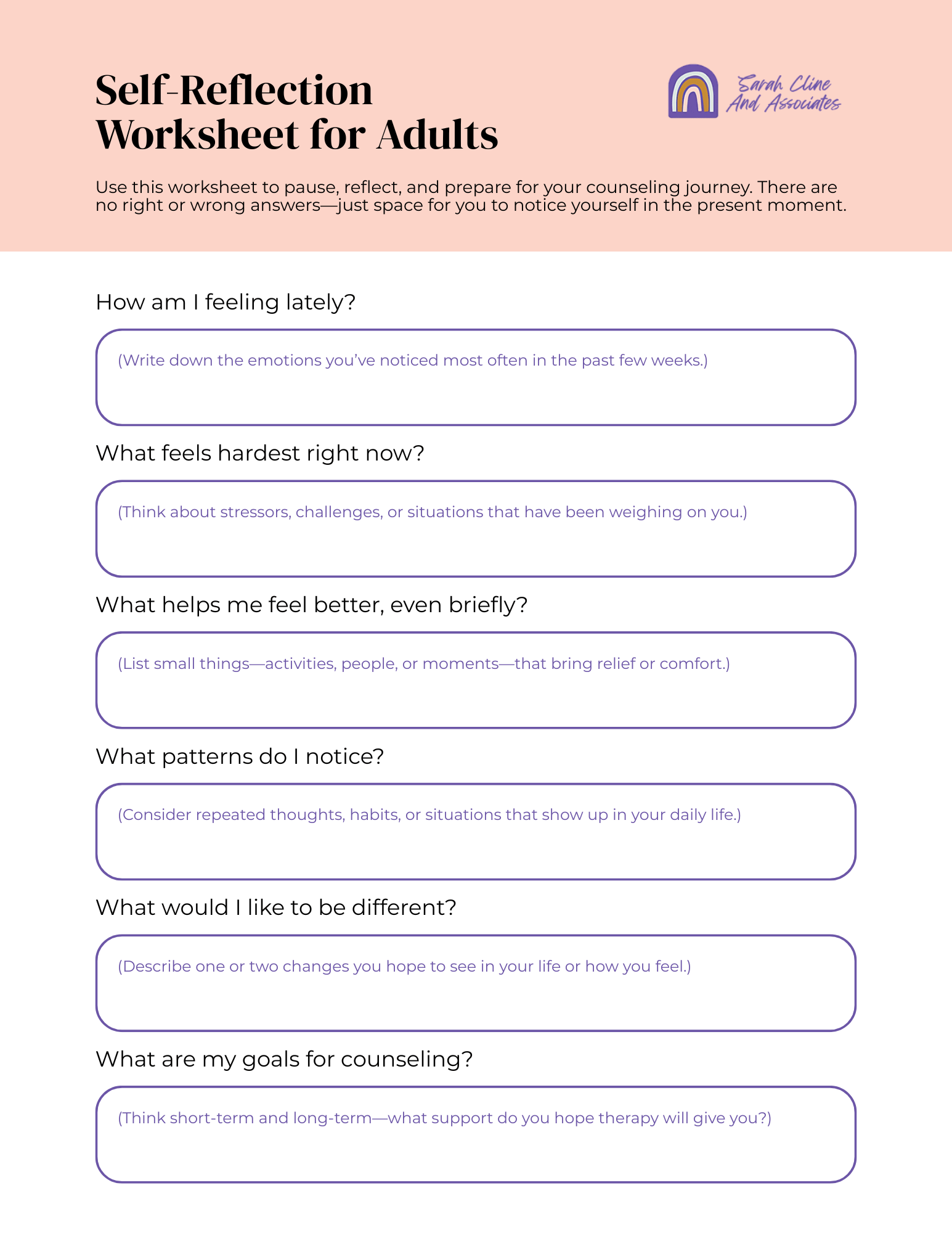
Free Self-Reflection Worksheet for Adults
Starting counseling often begins with looking inward. To help you take that first step, we’ve created a short self-reflection worksheet designed for adults. This simple, guided resource offers prompts to help you explore what’s been weighing on you, the patterns you notice in your daily life, and the goals you hope to work toward in therapy. Whether you’re new to counseling or returning after time away, this worksheet can help you clarify your thoughts and set intentions before your first session.
Frequently Asked Questions
How is adult counseling different from teen counseling?
Adult counseling focuses on responsibilities and life transitions—things like work, relationships, parenting, or retirement—while teen counseling centers more on identity, school stress, and family dynamics. Both use evidence-based approaches, but the support is tailored to the stage of life and unique challenges you’re facing.
Is adult counseling effective for managing stress and emotional challenges?
Yes. Adult counseling is an evidence-based approach that helps individuals better understand emotions, patterns, and stressors. Therapy can support emotional regulation, problem-solving, and healthier coping skills across a wide range of mental health concerns.
What issues can adult counseling help with?
Adult counseling can help with anxiety, depression, trauma, grief and loss, burnout, relationship challenges, identity exploration, and navigating major life transitions. Therapy is tailored to each person’s goals and experiences.
Do I need to have a diagnosis to start therapy?
No. You do not need a mental health diagnosis to begin counseling. Many adults seek therapy for support, personal growth, or help managing stress and emotional overwhelm.
How many therapy sessions do most adults need?
The number of sessions varies depending on your goals and needs. Some adults benefit from short-term therapy focused on a specific concern, while others choose ongoing support for deeper or longer-term work.
Is telehealth available for adult counseling?
Yes. Telehealth sessions are available and can be a convenient option for adults balancing work, family, and other responsibilities while still receiving consistent therapeutic support.
Is adult counseling confidential?
Yes. Therapy sessions are confidential, with limited exceptions required by law. Your therapist can review confidentiality and any questions you may have during the intake process.
Sources
• American Psychological Association (APA)
Psychotherapy is an effective, evidence-based treatment for adults experiencing anxiety, depression, stress, life transitions, and emotional regulation challenges.
https://www.apa.org/topics/psychotherapy
• National Institute of Mental Health (NIMH)
Mental health conditions commonly addressed in adult counseling, including anxiety, depression, and trauma-related concerns, respond well to therapeutic treatment and support.
https://www.nimh.nih.gov/health/topics
Feel Heard, Feel Safe, Feel Better - Contact Us

In-Person Sessions
2100 Manchester Rd. Suite 501-1
Wheaton, IL. 60187
Virtual Sessions
Throughout Illinois